
AI Coding Workflows That Hold Up
Practical workflows for coding tools that still work when the task gets messy.
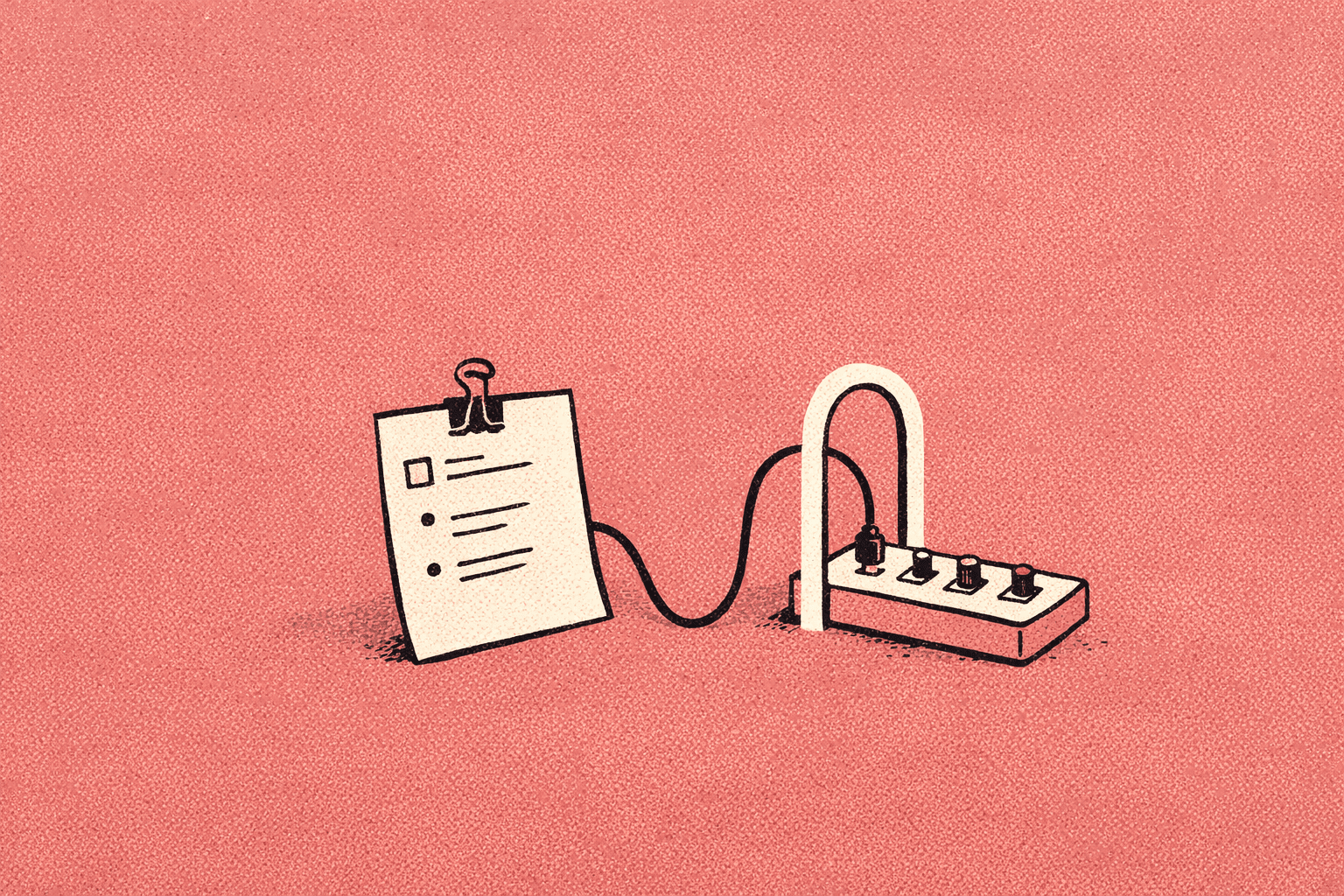
A lot of AI coding advice starts with the tool and ends with the tool. That is usually the wrong order. The useful question is not which plugin is best. It is which workflow still works when the task gets messy, the repo is old, and the first pass is wrong.
The signal here is simple: the creator behind Ralph Wiggum Loop reportedly shared his full workflow and argued for ditching the plugin-first habit, learning the basics, and building specs and checks around the work. I cannot verify every detail of that workflow from the signal alone, so treat it as a prompt, not a prescription. But the direction is familiar and worth taking seriously.
Start with the task shape
Agentic tools are strongest when the task has a clear boundary. They are weakest when the request is vague, cross-cutting, or dependent on hidden repo knowledge. Before you reach for a tool, define the work in one sentence.
Good candidates:
- a small feature with known files
- a refactor with explicit constraints
- a bug fix with a reproducible failure
- a test addition for an existing behavior
Poor candidates:
- “improve the app”
- “make this cleaner”
- “figure out the architecture”
This matters because the tool is not the plan. The plan is the plan. The tool only executes it.
Learn the basics first
The strongest pattern in the signal is the least glamorous one: learn the basics. That means understanding the codebase, the build, the test runner, the file layout, and the conventions well enough to judge the output.
If a team skips this, the agent becomes a confidence machine. It can produce plausible code that still misses local patterns, breaks edge cases, or adds work for reviewers. Basic fluency is what lets you catch that early.
In practice, this means engineers should be able to:
- run the app locally
- run the relevant tests
- trace a feature across files
- identify the smallest safe edit
- explain why a change belongs in one place and not another
That is not anti-automation. It is the minimum needed to use automation well.
Build specs before code
Specs do not need to be heavy. They do need to be explicit. A good spec for agentic coding is short, testable, and close to the implementation.
A workable spec usually includes:
- the user-visible behavior
- the files or modules likely to change
- the constraints that must not break
- the acceptance checks
If the task is larger, split the spec into phases. First the shape of the change. Then the implementation. Then the validation. This reduces the chance that the agent fills in missing intent with guesses.
A practical rule: if you cannot tell whether the task is done, the spec is not ready.
Put tests next to the change
The most durable AI-assisted work is not the prettiest code. It is the code that is easy to verify. Tests are the main reason.
For teams, the pattern is straightforward: ask the agent to write or update tests before or alongside the implementation. That gives you a stable target and makes review faster. It also exposes ambiguity. If the test is hard to write, the requirement is probably unclear.
This does not mean every change needs a full test suite expansion. It means the validation path should be part of the task, not an afterthought.
Keep the loop short
Long agent runs are where trust decays. The longer the loop, the more likely the tool drifts from the intended change or accumulates small mistakes that are hard to unwind.
A better pattern is short cycles:
- define the task
- generate a small change
- inspect the diff
- run the relevant checks
- revise immediately
That loop is boring, but it scales. It also makes failures legible. When something goes wrong, you know whether the issue was the spec, the code, or the test.
Use the tool as a junior collaborator, not a substitute
This is the tradeoff the signal points toward. If you want speed, you need review discipline. If you want autonomy, you need stronger specs and better tests. You rarely get both for free.
The practical limit is context. Agents can miss repo conventions, over-edit unrelated code, or choose a solution that is technically valid but operationally awkward. Human review still matters for architecture, naming, and risk.
So the right posture is not “trust the agent” or “don’t trust it.” It is “constrain the task so trust is earned quickly.”
A simple team workflow
For engineering teams, a workable baseline looks like this:
- write a short spec in plain language
- identify the files and checks involved
- ask for the smallest complete change
- require tests or a clear validation path
- review the diff before expanding scope
That workflow is tool-agnostic. It works in an IDE, a CLI, or a mixed setup. The point is not the interface. The point is the control surface around the model.
Methodology reflection
This is mostly a Build problem. The useful move is to keep the implementation small enough that our methodology can treat it as a reviewable unit, not a vague experiment.
What holds up
The tools that hold up are the ones that fit into existing engineering habits. They do not replace specs, tests, or review. They make those habits faster when the task is well framed.
That is a narrower claim than most AI coding marketing makes. It is also more believable. If a workflow still works when the repo is messy and the task is real, it is probably worth keeping.
Related research

Lead Sourcing with Agents
Use an agent to turn public signals into a prospect list and draft outreach for human review.

Narrow Creative Skills for Coding Agents
Give an agent one narrow creative job and review the output against a clear checklist.

Plain-English Agent Updates
A small instruction change can make agent output easier to review and trust.