
Agentic Coding Governance for Teams
Practical ai coding governance for engineering teams: scoped rules, MCP boundaries, skills, and review loops.

The situation
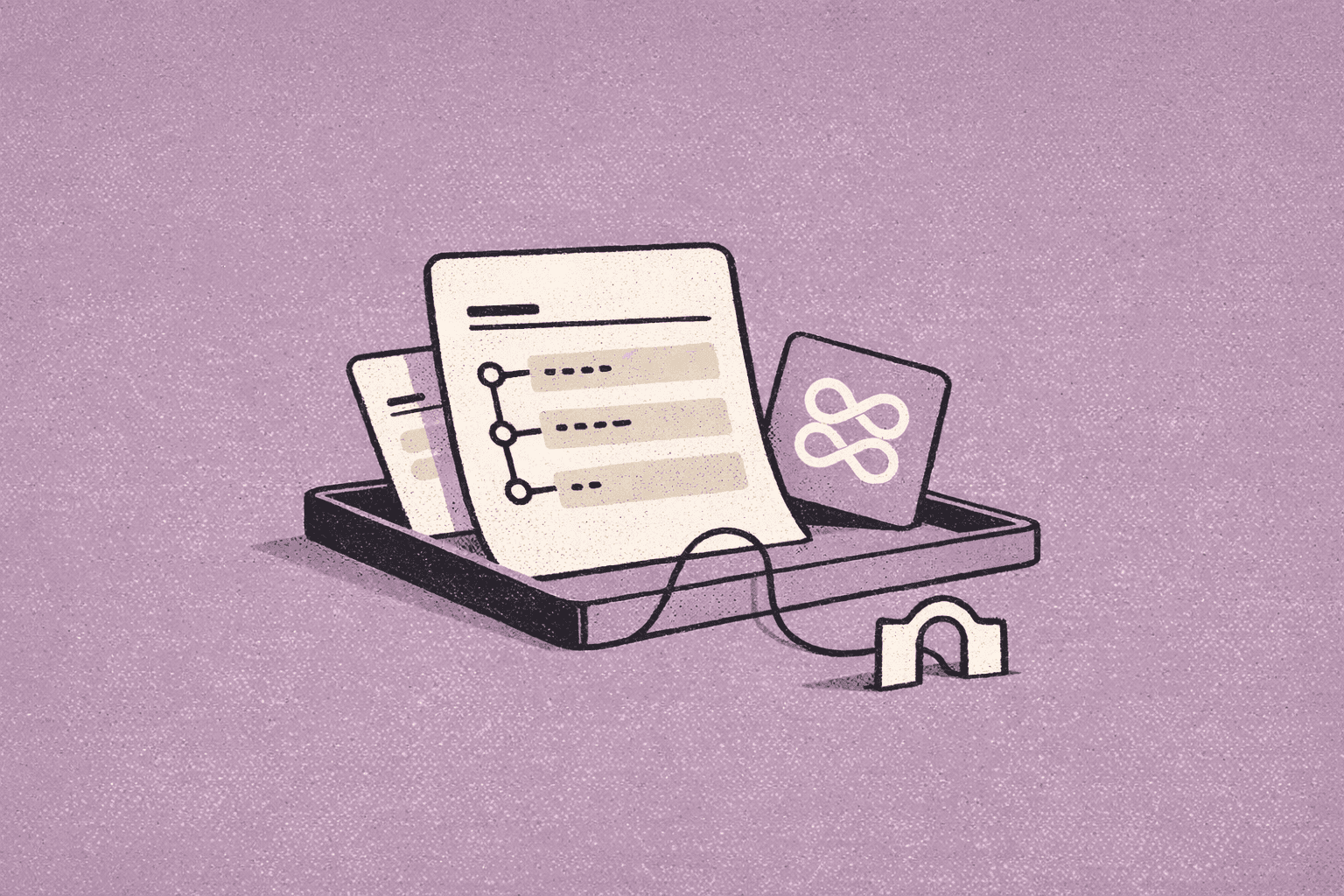
The signal here is not that one model got better. Teams are starting to treat agentic coding as an operating system problem: what context gets loaded, what tools are allowed, what gets reviewed, and what gets reused across projects. That matters for ai coding governance because the failure mode is usually not a bad answer in isolation. It is a good-enough answer that bypasses repo rules, reaches too far into tools, or ships without a reviewable trail.
For engineering teams running an ai coding workshop or standardizing developer productivity workflows, the practical question is simple: what should be written down once, what should be loaded only when needed, and what should be blocked by default? The answer is similar across Codex, Claude Code, and Codex, even though the surfaces differ. You want durable instructions, scoped capabilities, connector boundaries, and a verification loop that makes agent-authored work inspectable.
Codex’s rule model, Claude Code’s memory and skills system, and Codex’s instruction chain all point in the same direction: smaller scopes beat giant prompts. That is the useful reading of the Codex post about training future Composer generations on earlier ones. Whether or not your team uses that exact setup, the governance lesson is the same: keep the next model focused on harder work by moving repetitive setup, environment prep, and policy into reusable artifacts.
Walkthrough
-
Start with one shared rule for the whole team, then split by scope.
The first artifact should be a lightweight team convention file, not a giant prompt pasted into chat. In Codex, that usually means moving from a single broad rules file to scoped
.cursor/rules/*.mdcfiles. In Claude Code, the equivalent is a conciseCLAUDE.mdplus narrower project memory where needed. In Codex, the anchor isAGENTS.md, with nested files or overrides for local exceptions.Keep the rule short enough that reviewers can judge whether it is still true.
---
description: Repo-wide review and change rules
globs:
  - "**/*"
alwaysApply: true
---
- Prefer small diffs.
- Ask before changing build or deployment files.
- Update tests when behavior changes.
- Do not bypass repo-specific checks.
-
Separate reusable capability from always-on instruction.
This is where teams often blur the line. A skill should be a task package: instructions, scripts, and resources that load only when relevant. Claude’s Skills docs describe progressive disclosure, which is the right pattern for specialized workflows. Codex teams can use skills alongside rules when a task needs a repeatable procedure. Codex teams can package the same idea through skills plus CLI automation.
A practical ai coding training workshop exercise is to turn one recurring task into a skill and leave the policy in the repo memory file. For example: a release-note drafting skill, a test-failure triage skill, or a migration checklist skill.
---
name: repo-review-skill
description: Use for PRs that need a concise change summary, risk check, and test evidence.
---
-
Put tool access behind a boundary, not inside the prompt.
MCP is the connector layer, so it should be reviewed like any other integration. The team question is not “can the agent reach Slack, Jira, GitHub, or a database?” It is “which tasks need that access, and what is the minimum scope?” For Claude Code, that means reviewing
.mcp.jsonand permission modes. For Codex, it means checking which MCP servers are available in the workspace and whether the task actually needs them. For Codex, it means keeping connector scope visible in the CLI workflow and not assuming every automation step should have broad access.A useful rule: if the task can be completed from the repo alone, do not add a connector.
-
Add a verification loop before you add more autonomy.
The strongest shared pattern across tools is still: generate, inspect, verify, then merge. Codex makes this especially explicit through CLI automation and sandbox/approval modes. Claude Code supports reviewable diffs and command execution in the terminal. Codex supports agentic IDE workflows, background agents, and browser control, but those should still end in a human-checkable diff and test result.
The workshop artifact here is a short review checklist:
- Did the agent change only the intended files?
- Are repo rules still satisfied?
- Did tests or checks run?
- Is any connector access justified?
- Can a reviewer reproduce the result?
-
Map one concrete next step per product.
- Codex: split one bloated rule into a
.cursor/rules/tree and add anAGENTS.mdfor team conventions. - Claude Code: write a compact
CLAUDE.md, then add one skill for a repeated task and one hook for a deterministic check. - Codex: define
AGENTS.md, then run a headlesscodex execverification loop against a small repo change.
That mapping keeps the workshop practical. Each tool gets one artifact, one boundary, and one review step.
- Codex: split one bloated rule into a
A small methodology note: this is a Design problem before it is a Build problem. If the team cannot name the artifact, scope, and review step, the agent will inherit ambiguity. See our methodology for the same sequence applied to other workshop topics.
Tradeoffs and limits
This approach breaks down when teams try to encode policy as prose only. Long instructions are easy to ignore and hard to audit. If a rule matters, put it in the file the tool actually reads: .mdc, CLAUDE.md, AGENTS.md, a skill, a hook, or an MCP config.
It also breaks down when connector scope is treated as a convenience feature. MCP can widen the blast radius of a mistake if permissions are too broad or if the team does not review what external systems the agent can touch. Least privilege is not optional here; it is the main control.
Another limit is coordination overhead. Subagents, background agents, and CLI automation can improve throughput, but they also create more places for context to drift. If the parent task is vague, the child worker will be vague too. Keep delegation narrow and return summaries that a reviewer can inspect quickly.
Finally, not every repo needs the same level of agent governance. A small internal tool may only need one memory file and one verification loop. A regulated or high-change codebase may need layered rules, approval modes, hooks, and explicit review gates. The right answer is the smallest set of artifacts that still makes agent-authored work safe to trust.
Further reading
Related training topics
Related research

CI Fixes with Agent Governance
Turn CI failures into a governed agent workflow with rules, MCP boundaries, and review checks.
Agentic Coding Governance
Practical ai coding governance for rules, MCP boundaries, and review checks across engineering teams.

MCP for Team Workflows
Shared integrations can cut context switching and make agent actions easier to review.